
Portfolio
Meet the Monsters
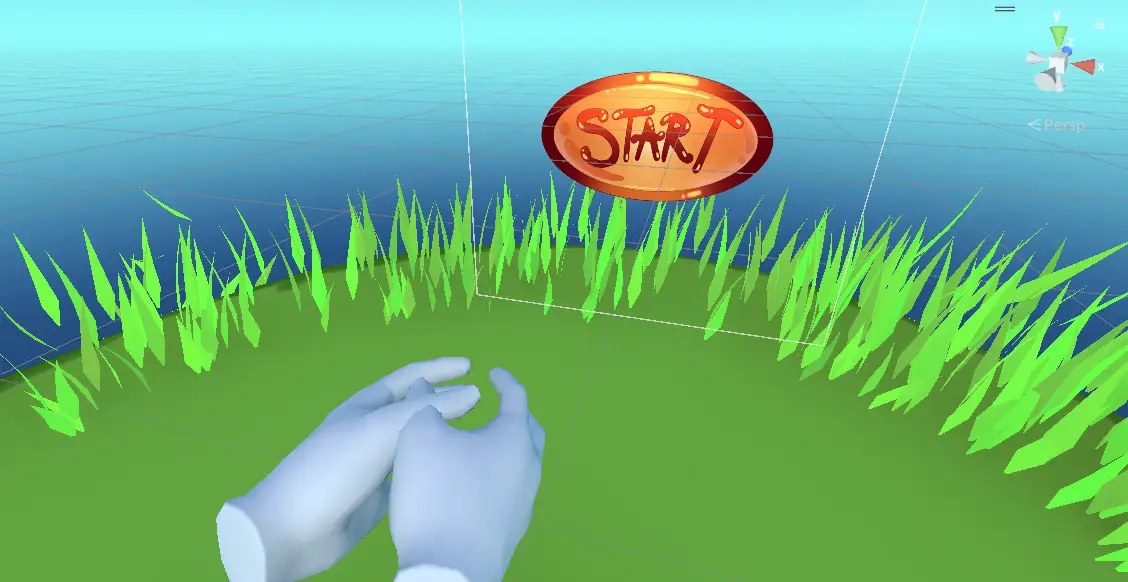
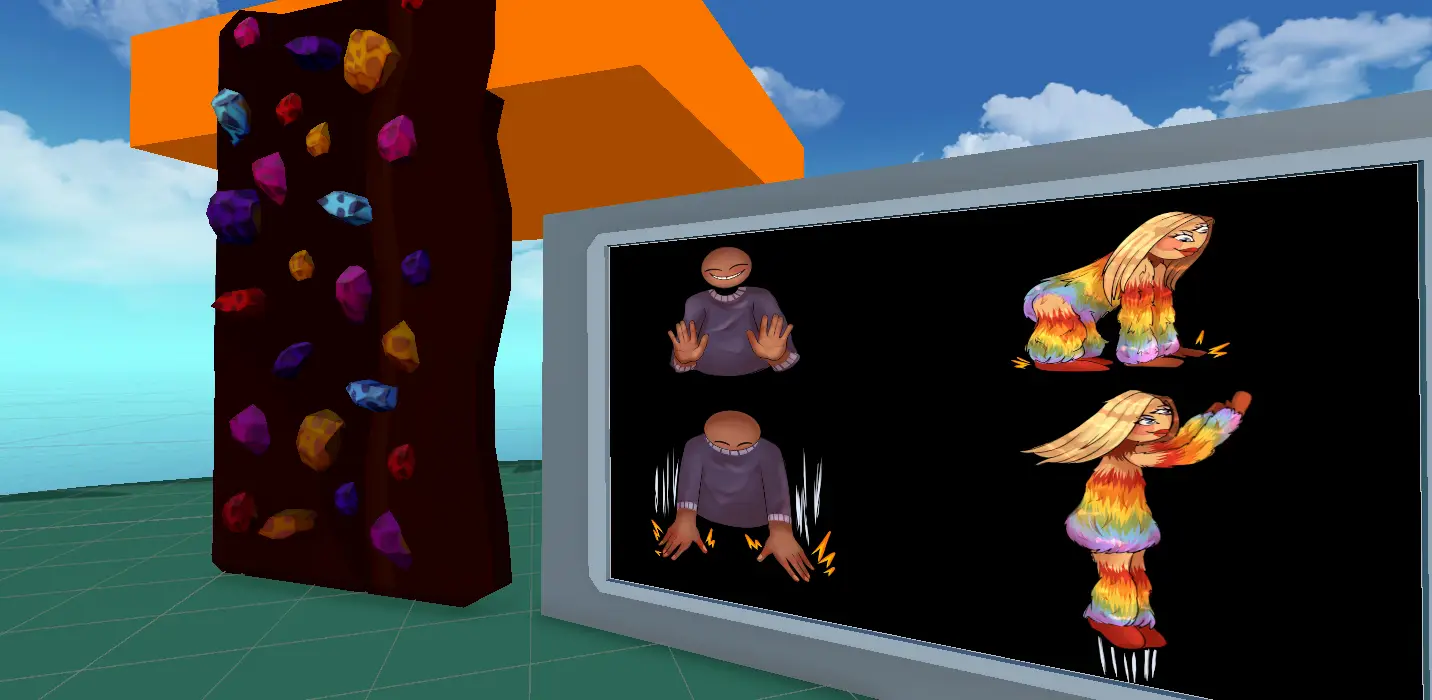
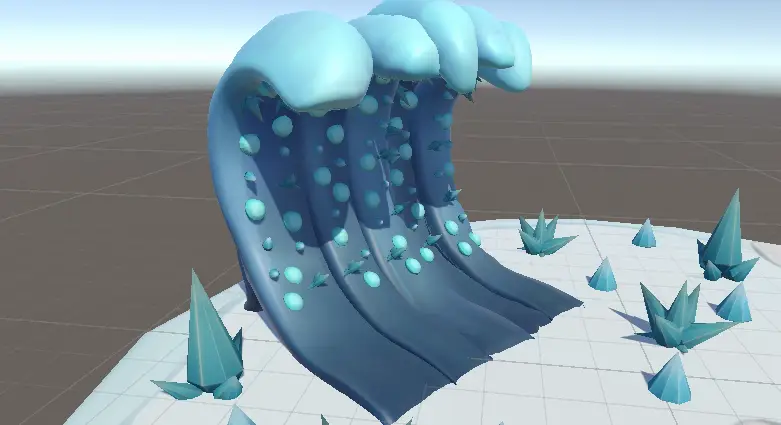
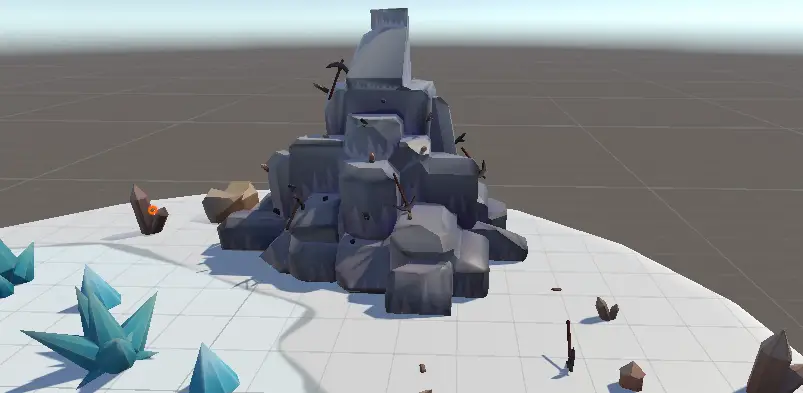
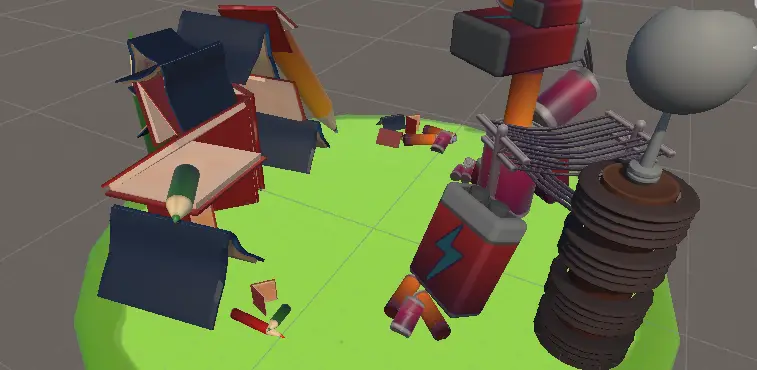
Game Description:
Meet the Monsters is a 3D VR project designed for children to interact with monsters they had drawn themselves. Players explore large maps using Gorilla Tag-style movement to find missing items for each monster and return them. The game emphasizes creativity and exploration, providing an immersive experience for kids.
My Role and The Team:
I collaborated with three artists, two engineers, and another designer . My role focused on level design, ensuring the environments were engaging and easy for kids to navigate. I also worked on creating an interactive user experience tailored for young players, conducted weekly playtesting sessions with kids to refine the mechanics, and coordinated team efforts to ensure smooth production.
What Went Right:
We set a realistic scope supported by early risk analysis, which helped us stay ahead of potential issues.
The team was strong and tasks were divided evenly, so work progressed steadily from the start.
Because of this structure, we were able to move quickly and keep the project on track.
What Went Wrong:
The workload was heavier than expected and took more time than planned.
Because of that, we had to adjust our schedule midway to stay on track.
What Did I Learn:
Even when tasks become heavier than expected, adjusting production early keeps the project stable.
Clear task distribution and consistent team communication make it easier to reach the final deliverables.
In the end, these practices helped us still reach the full project scope and deliver a complete game demo.
Blueprint: Breakdown
Game Description:
This 2D physics-based puzzle game, inspired by The Incredible Machine, challenges players to guide a ball from the starting point to the endpoint by operating various machines. The game combines problem-solving with timing, offering engaging and creative mechanics. It was developed using GXPEngine, an open-source engine created by Saxion UAS professors for the CMGT course.
My Role and The Team:
Leading a team of three artists, two engineers, and a co-designer, I ensured smooth collaboration and project progress. My contributions included designing and balancing levels, developing and refining gameplay mechanics, and determining how best to introduce these mechanics to players. I also coordinated workflows, facilitated team discussions, and organized playtesting sessions to fine-tune the game. While managing the overall project, I actively contributed creative ideas to enhance both the gameplay experience and the team’s collective vision.
What Went Right:
Everyone understood each other’s skills.
What Went Wrong:
The game was solid, but the documentation wasn’t ready on time.
What Did I Learn:
Scope needs to stay controlled to avoid late problems with extra mechanics.
Working with friends requires a more professional approach to keep communication and expectations consistent.
Case: Burnside
Game Description:
Case: Burnside is a point-and-click puzzle escape game developed in a basic, unfinished engine built with Java in Processing. Players take on the role of a detective working to stop a virus-like alien plant from spreading. The game features intricate puzzles and a branching ending where players must choose to sacrifice themselves to save the world or doom it by unleashing the alien plant.
My Role and The Team:
In this project, I was responsible for designing all puzzles and crafting the overall level design. I also adapted the unfinished engine to implement various features, ensuring the game ran smoothly. Working alongside a small team, I played a key role in conceptualizing and creating the gameplay flow, including the narrative-driven choices at the end. This project pushed the boundaries of creativity and technical adaptation, as we had to innovate within the limitations of the engine to deliver a complete and engaging experience.
What Went Right:
We set a realistic scope from the start, which kept the project manageable.
Tasks were divided evenly and aligned with each team member’s strengths.
Production went smoothly overall, and even the technical issues with Processing were solved without major delays.
What Went Wrong:
One artist spent one to two days on assets that were later scrapped, which cost us time.
We had a short crunch near the deadline to finish the remaining art.
What Did I Learn:
A clear style sheet helps avoid unnecessary rework and prevents assets from being cut late in the process.
Managing scope realistically and assigning tasks based on strengths keeps the team efficient.
Baby Chill
Game Description:
Baby Chill is a 3D Unity-based game addressing the issue of heatstroke in babies left in cars. Players must rescue babies from overheating vehicles and safely deliver them to daycare, all while avoiding traffic and ensuring cars don’t overheat. The game uses shock elements to raise awareness of this critical issue.
My Role and The Team:
I worked with a team of two designers, two engineers, and three artists. My contributions included designing levels that balanced difficulty and impact, managing the team’s workflow and tasks, playtesting the game to ensure its functionality and engagement, and contributing to the conceptual design to deliver a meaningful experience that supported the game’s awareness campaign.
What Went Right:
Once the idea was finally locked in, the team coordinated well and moved quickly.
We managed to reuse several assets in smart ways to keep production moving despite time pressure.
What Went Wrong:
Because of the late start, we had limited time to create assets and polish gameplay.
There were also personal issues within the team that affected availability, which I didn’t plan for.
Getting all systems working by the deadline was difficult due to the compressed schedule.
What Did I Learn:
Accounting for team availability needs to be part of planning, even when working with people you know.
Reusing assets effectively can save a project when time is tight.
Overall, it taught me how to handle unpredictable team situations while still reaching a final product.
Shadow Brawlers
Game Description:
Inspired by Street Fighter, Shadow Brawlers is a 2D combat game developed using GXPEngine. In addition to creating the game itself, the project required the construction of a custom joystick controller, which we built using Arduino and programmed for compatibility. The game features unique characters, each with their own abilities and combat styles, offering a competitive and immersive experience.
My Role and The Team:
As the producer, I ensured the team stayed on track and met deadlines, coordinating efforts across all disciplines. I also served as the combat designer, crafting each character’s abilities and moveset to ensure balance and variety in gameplay. Beyond game design, I was instrumental in the physical construction of the joystick controller, handling both the hardware and programming aspects. The project emphasized creative problem-solving, as we integrated the custom controller seamlessly with the gameplay.
What Went Right:
Engineering stayed steady throughout the project, and the main systems were implemented on time.
Despite the challenges, we still managed to complete a functional demo with all core features.
What Went Wrong:
One artist didn’t follow the agreed style and color palette, and I waited too long to address it.
Another artist became frustrated with late art changes and stopped contributing near the end.
These issues created delays and made production less smooth than it needed to be.
What Did I Learn:
Addressing problems with the art pipeline sooner prevents unnecessary rework and protects team morale.
A clear style sheet only works if it’s reinforced consistently throughout production.
Even with setbacks, good engineering structure can carry a project to the finish line.
Witch’s Catastrophe
Game Description:
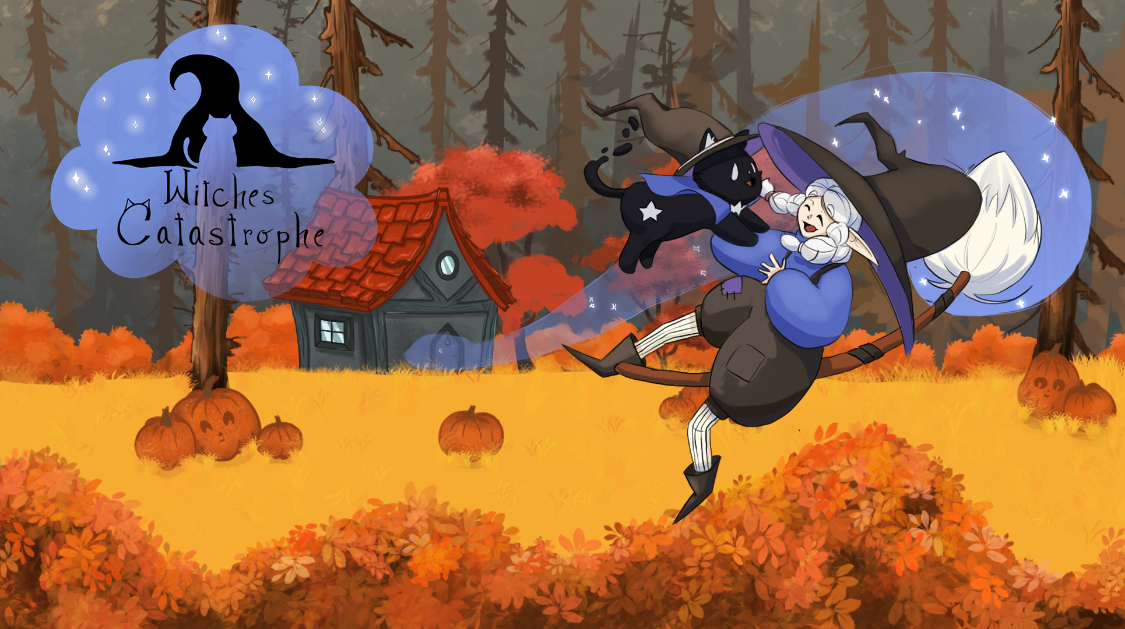
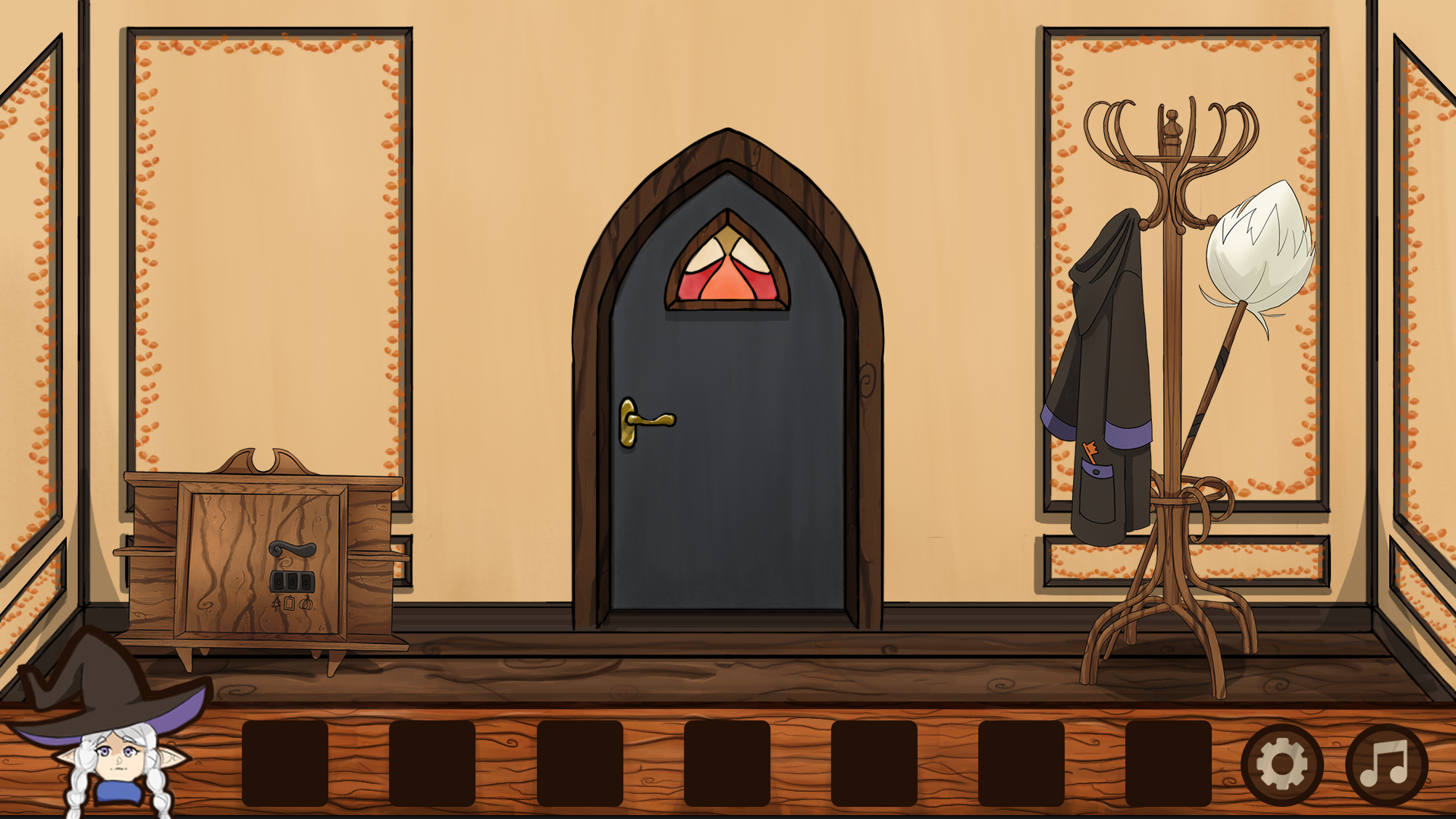
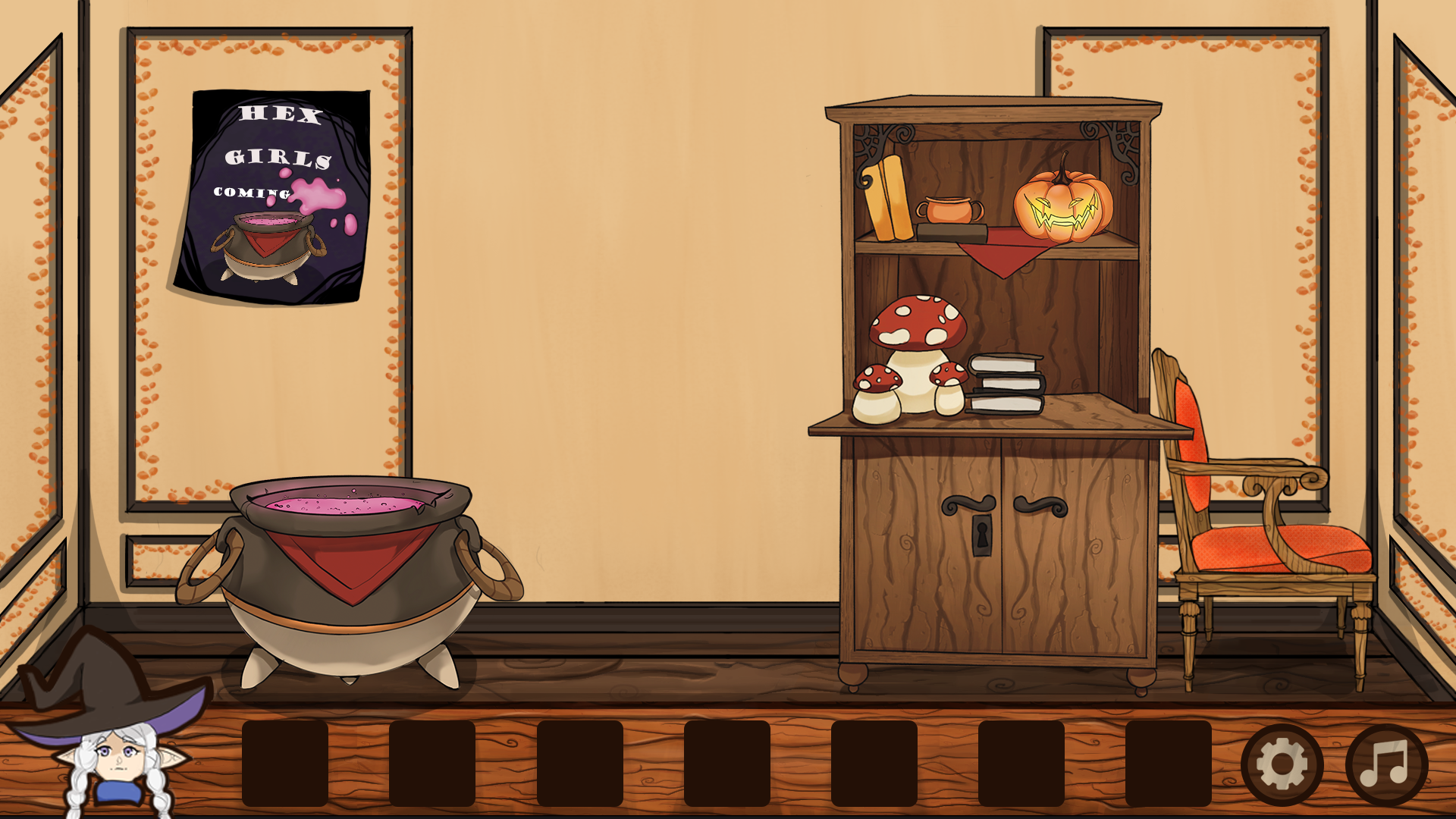
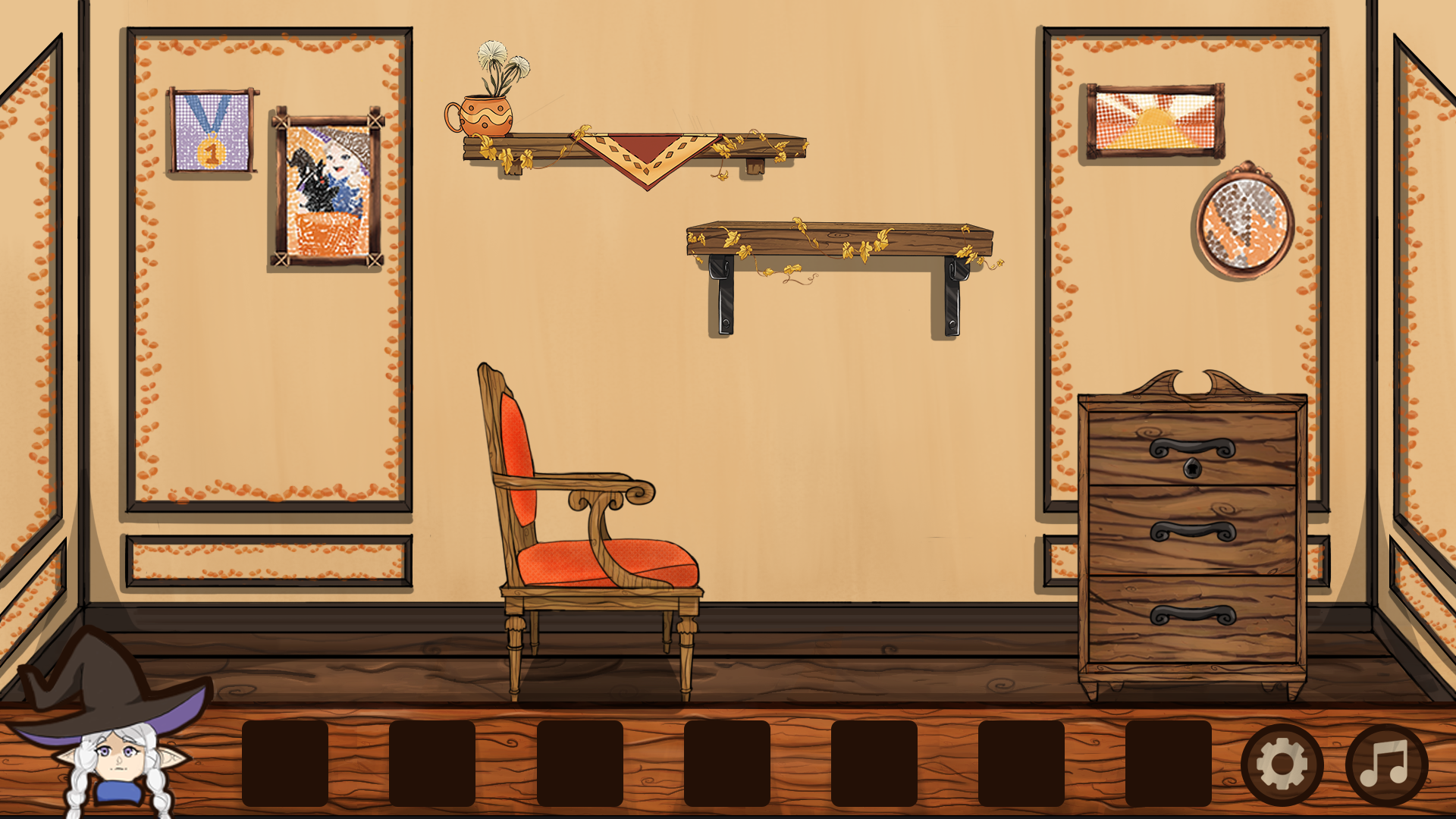
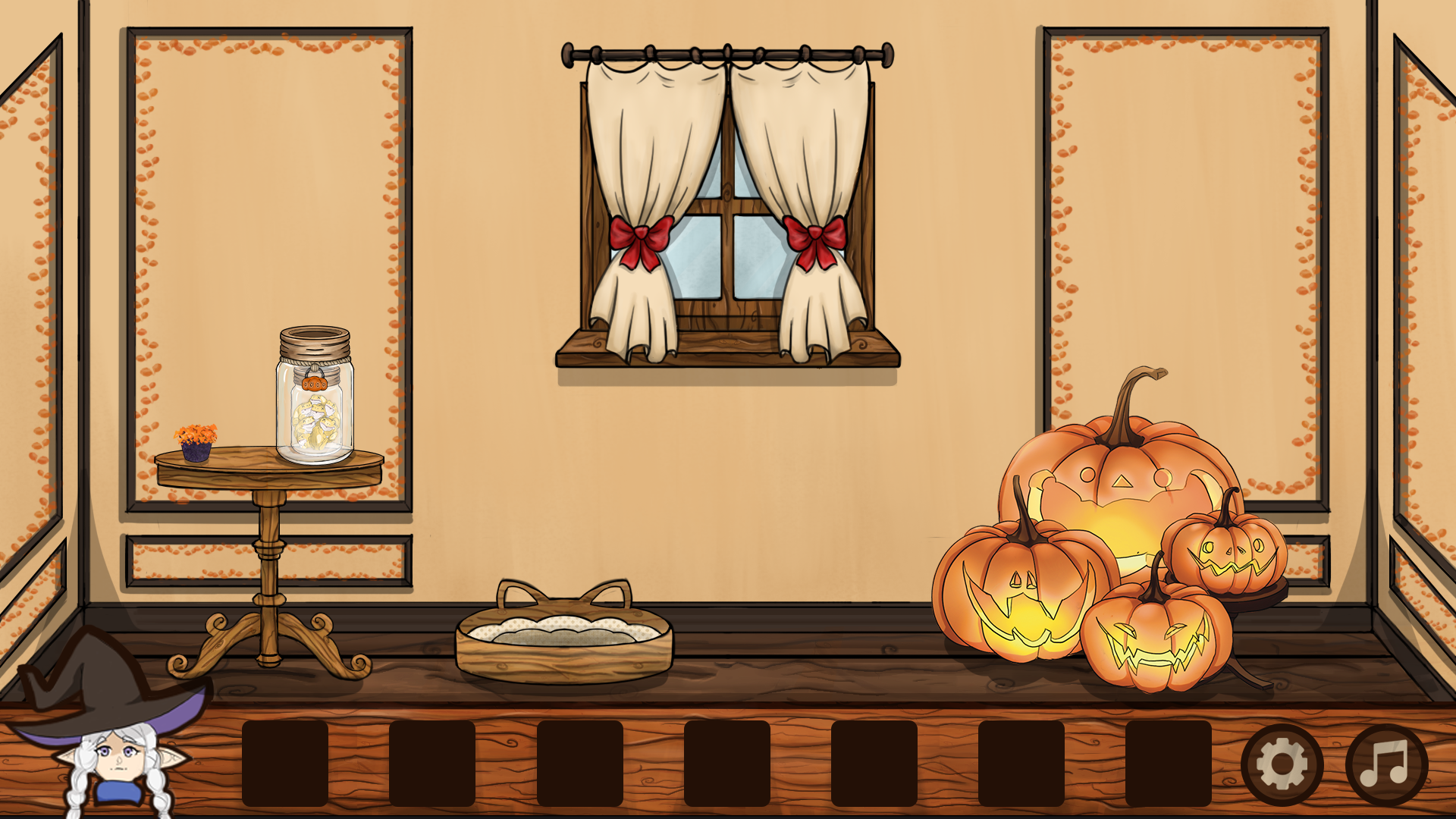
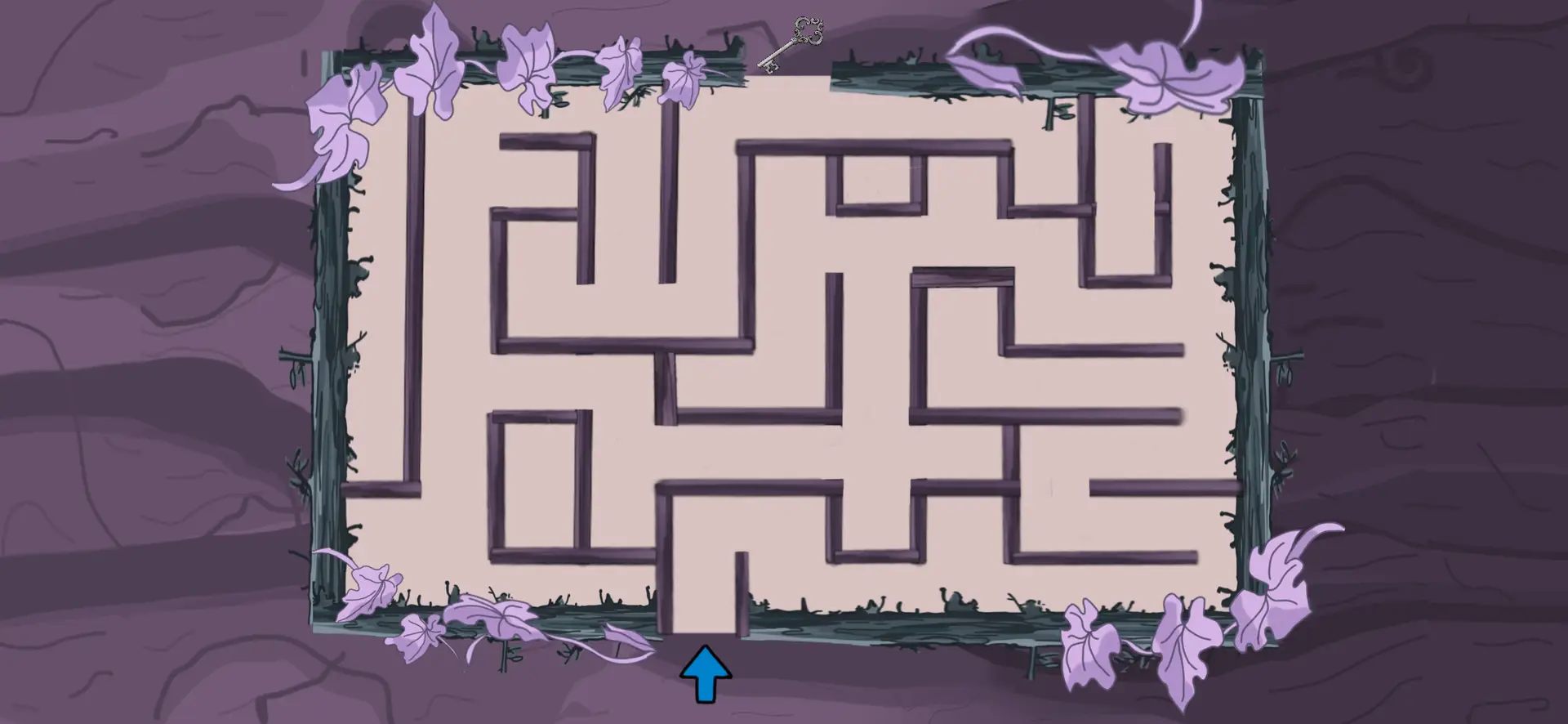
Witch’s Catastrophe is a 2D mobile puzzle game inspired by The Past Within. It requires two players to connect to the same device and collaborate to solve puzzles. The story follows a witch whose cat accidentally adds an extra ingredient to a potion, causing her to lose her memory. The witch and the cat must work together—using two screens—to uncover magical clues and recreate the potion to restore her memories. The twist is that the cat can see magical elements invisible to the witch, making teamwork essential.
My Role and The Team:
I worked with a team of one engineer, two designers, and three artists. My responsibilities included designing intricate puzzles that challenged players’ teamwork and logical thinking, crafting intuitive levels that balanced gameplay, and enhancing the user experience to ensure smooth interaction across two devices. As the Scrum Master, I managed team workflows, facilitated communication, and conducted regular testing sessions to refine the gameplay experience.
What Went Right:
Collaboration between designers worked smoothly, which helped streamline decisions.
We aligned on the concept early, allowing production to start without delays.
Art and design tasks were delivered on time, providing a stable base for development.
What Went Wrong:
The game required mobile multiplayer with networking and several interactable systems, which was too large of a task for one engineer.
Because of this, the functionality wasn’t fully implemented even though art and design deliverables were ready.
What Did I Learn:
I now understand how to better evaluate technical scope, timeline pressure, and what to look out for when multiplayer features are involved.
It also reinforced how important it is to balance tasks fairly across roles so no one gets overloaded.
World Class BCN Monopoly
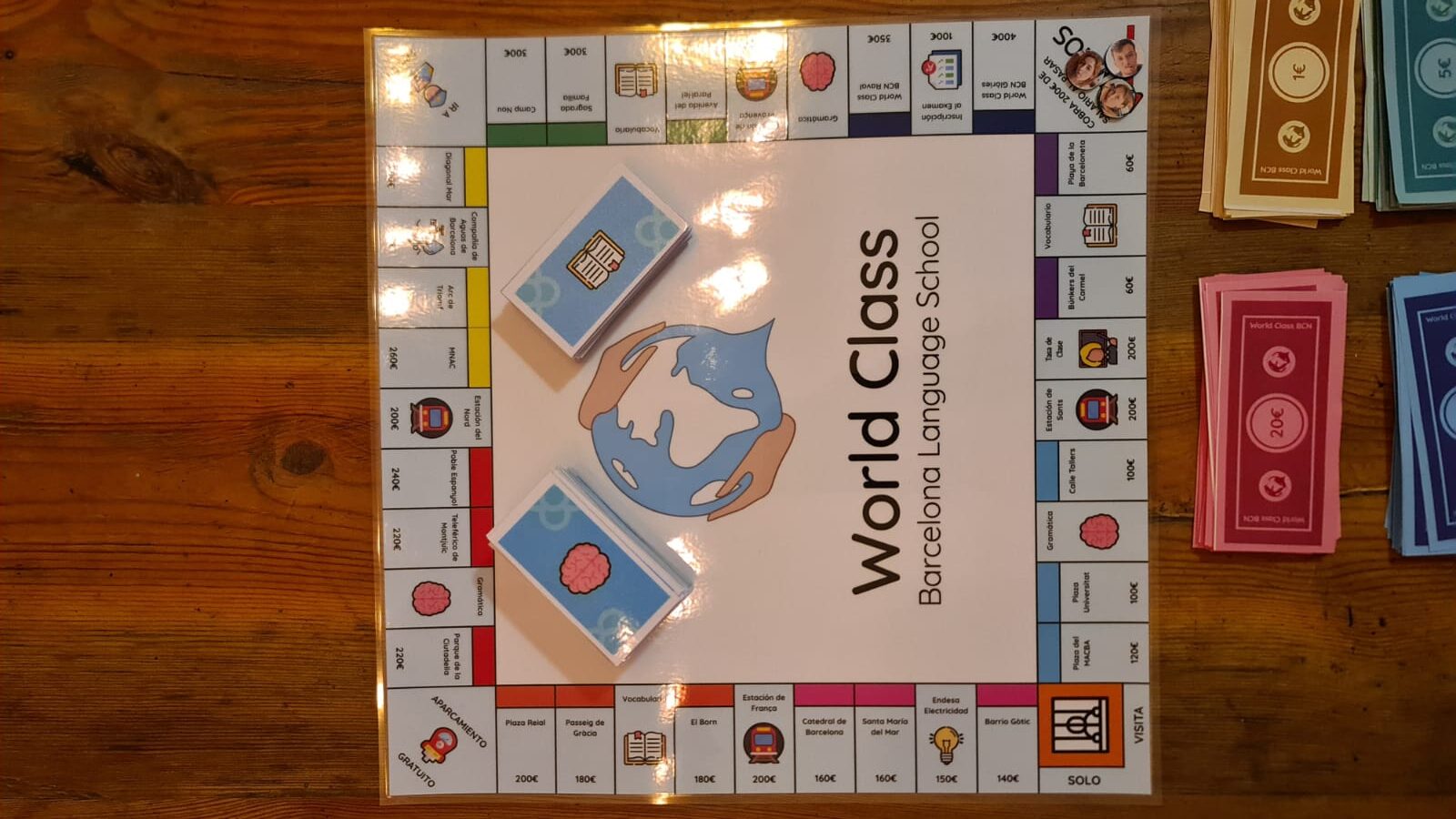
Game Description:
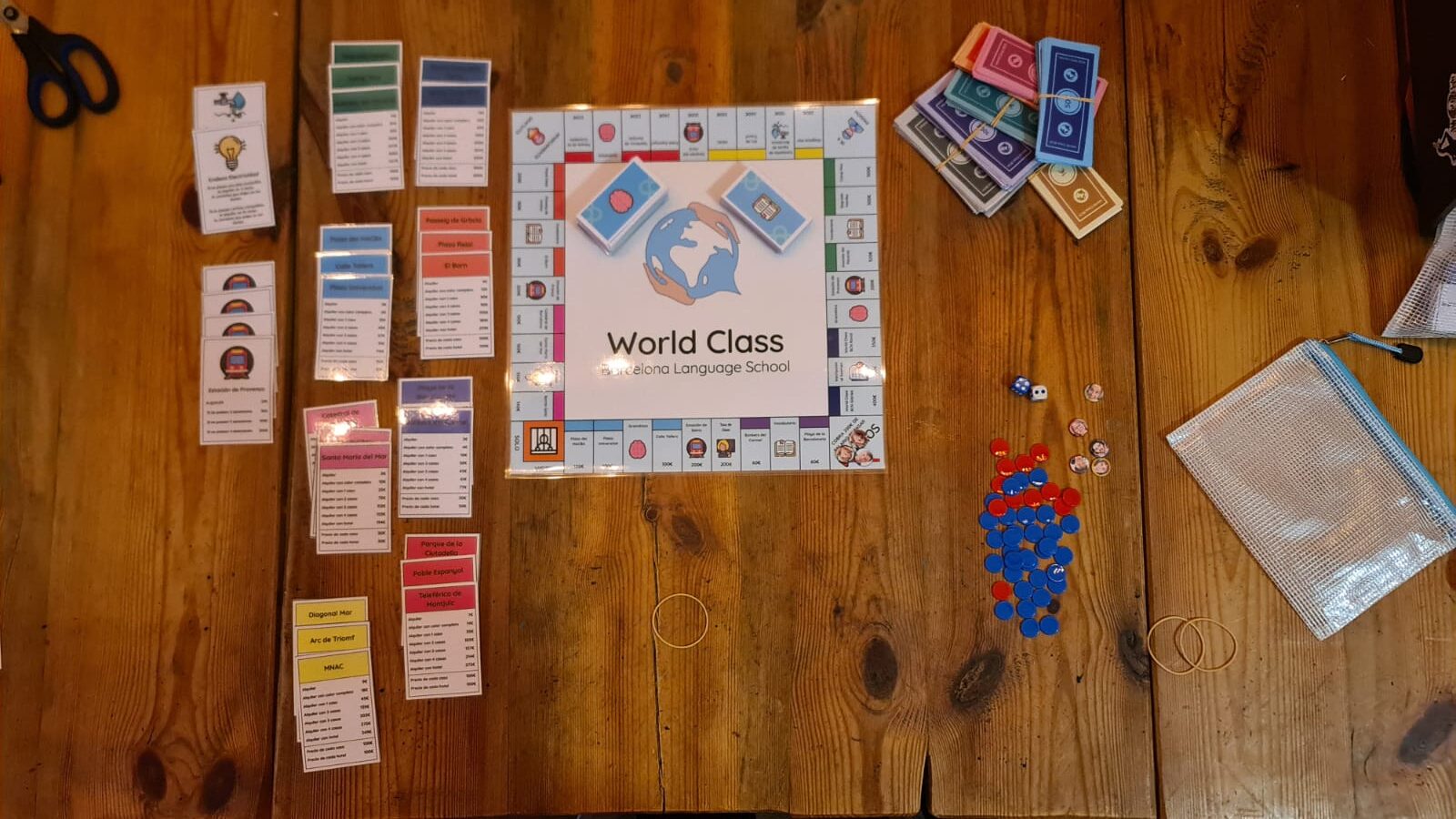
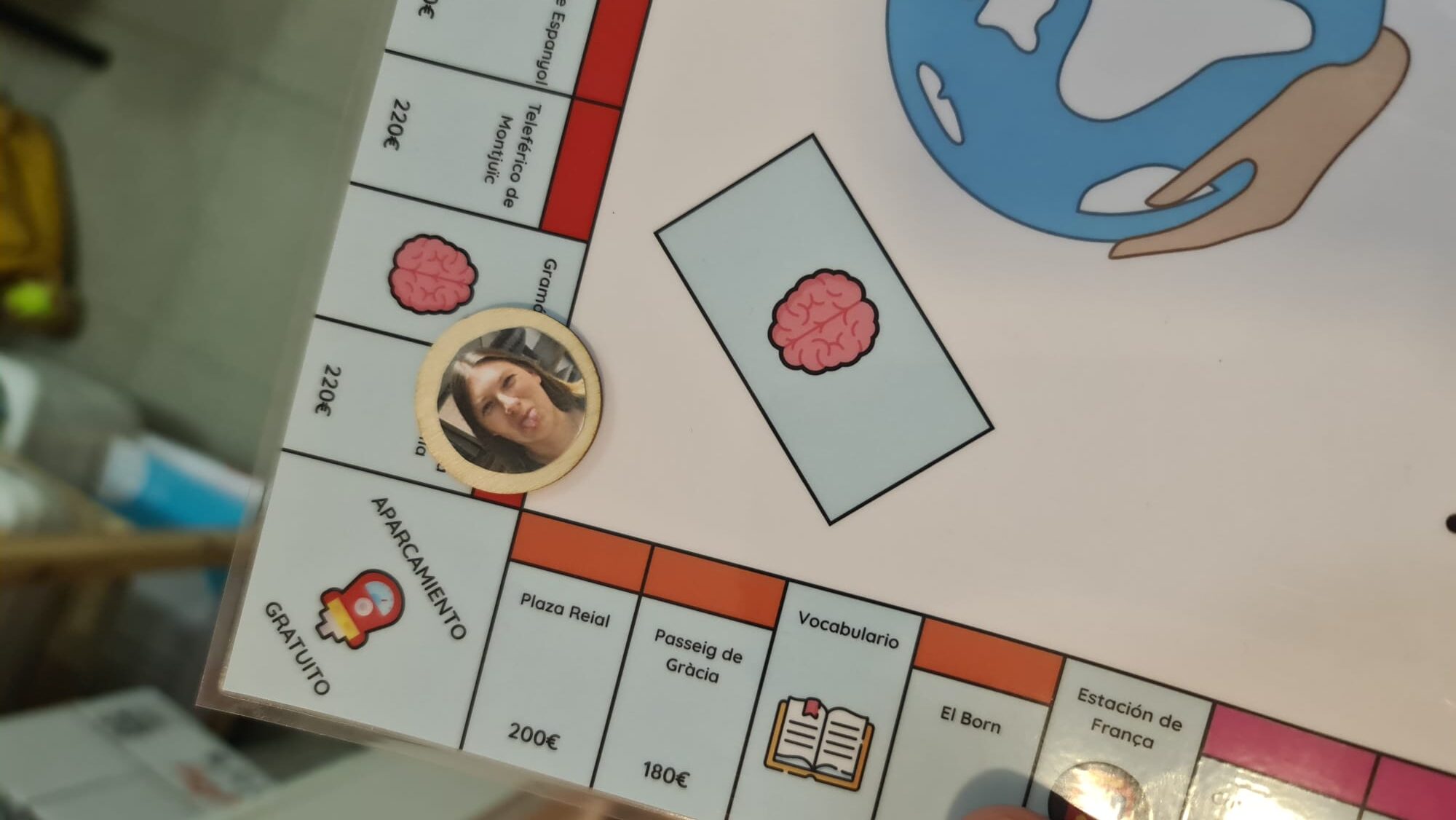
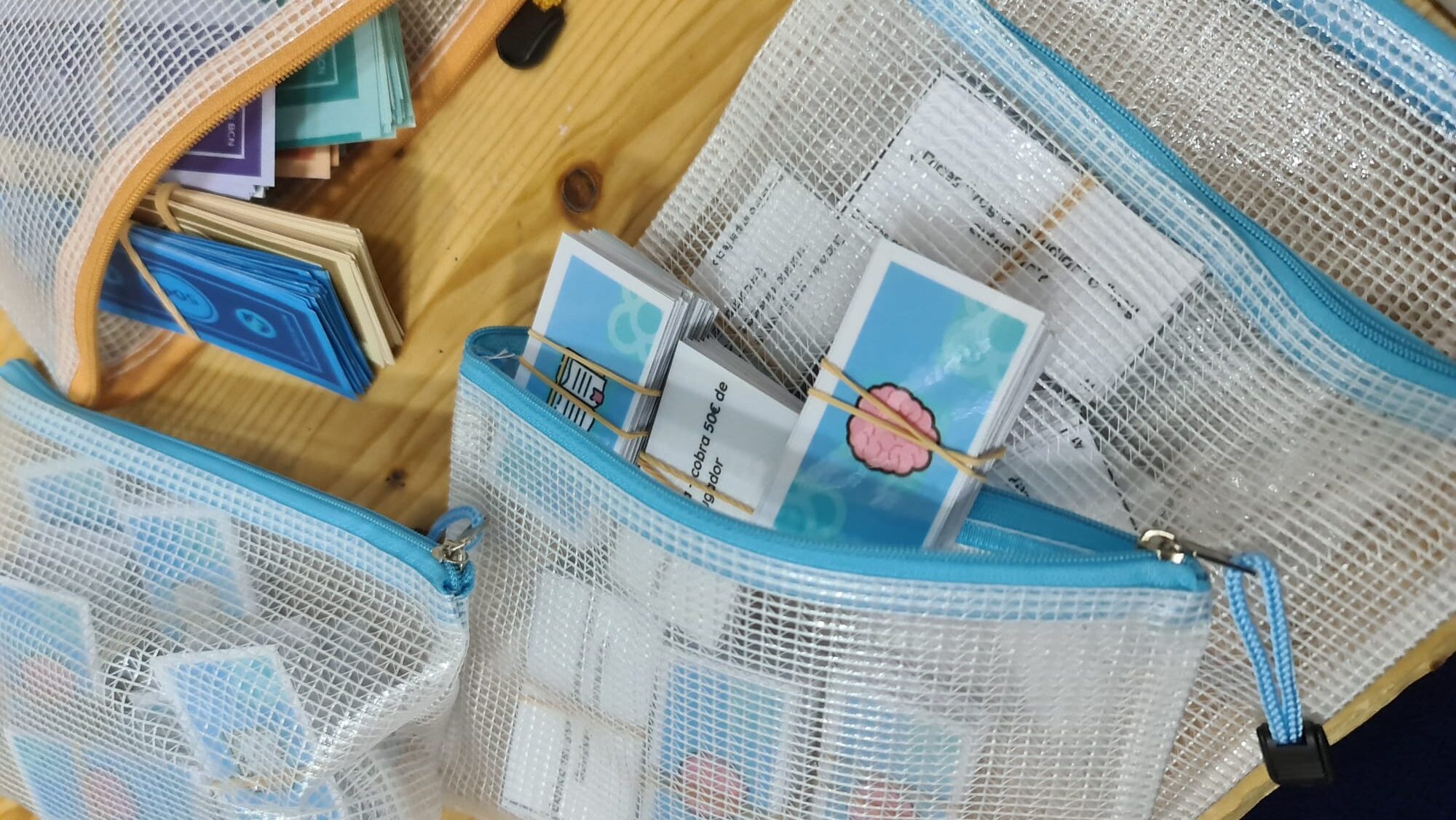
Monopoly-style board game for A1 and A2 Spanish students. Barcelona locations replaced the usual Monopoly streets, and every property or step on the board triggered a grammar, vocabulary, or speaking task. The system is simple to use in class, quick to set up, and easy for teachers to adjust to different levels.
My Role and The Team:
The project was done inside World Class BCN with input from teachers, interns, and students. The main tasks were structuring the board, defining task categories, writing A1/A2 content, and creating icons and layouts that were easy to understand. It also involved gathering feedback from teachers, testing the prototype in class, and adjusting the design based on how students reacted during the game.
What Went Right:
What Went Wrong:
What Did I Learn:
Small design details (icons, line thickness, fonts) matter more than expected.